Malaysia


Why Preoperative Training Matters
Preparing the body for surgery has been shown to improve recovery. When patients enter the operating room with stronger quadriceps, better mobility, and improved neuromuscular control, their outcomes are significantly better.
Scientific Evidence
- Research by Mizner et al. (2005) showed that preoperative quadriceps strength explains up to 58 per cent of the variation in functional recovery after a knee replacement. Patients who start stronger recover better.
- Topp et al. (2009) demonstrated that patients who complete a prehabilitation program can get up faster, walk more comfortably in the early post-operative phase, and rely less on walking aids.
- Petterson et al. (2011) found that reduced quadriceps mass before surgery is linked to slower recovery and poorer functional outcomes.
How DAVID Supports Prehabilitation
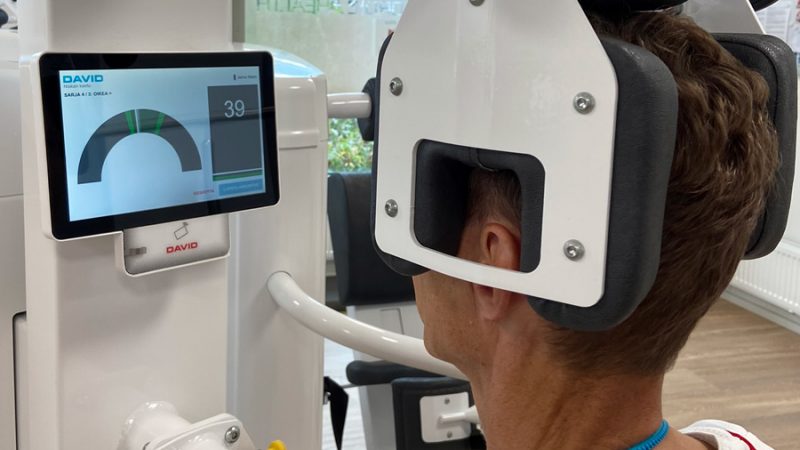
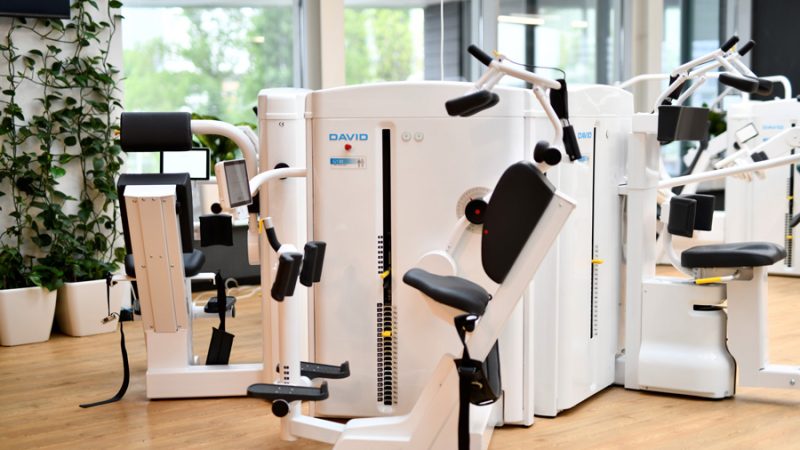
DAVID devices allow clinicians to tailor training precisely to a patient’s physical capacity. Range of motion can be limited to pain-free levels. Strength can be measured objectively. Training loads can be adjusted progressively and safely. The EVE software platform visualises progress in clear graphs, which increases both patient motivation and clinical accuracy.
Postoperative Recovery: The Importance of Measurable Progress
During the first weeks after a knee replacement, the right balance between rest and controlled loading is essential. Insufficient loading can slow progress, while excessive loading may increase swelling and pain.
DAVID technology provides a safe environment in which movement can be accurately guided.
Scientific Evidence
- Lange et al. (2012) found that progressive resistance training between weeks two and six significantly improves walking ability, quadriceps strength, and overall functional independence.
- Jakobsen et al. (2017) concluded that early strength training after knee replacement is safe when performed under controlled conditions and does not increase the risk of complications or prosthesis-related problems.
- Bade et al. (2011) showed that rehabilitation programs that include objective measures such as strength, mobility, and symmetry lead to superior outcomes compared to traditional, non-measured therapy.
How DAVID Improves Postoperative Rehabilitation
DAVID knee devices allow clinicians to set exact limits for range of motion, ensuring that the patient moves only within safe boundaries. The system measures every repetition, provides consistent, reproducible strength data, and gradually increases resistance based on patient performance. Through the EVE software, therapists can adjust programs and monitor outcomes with precision.
A Modern Rehabilitation Pathway with DAVID
Preoperative Phase
- Baseline mobility and strength measurements
- Two to three training sessions per week
- Focus on quadriceps strength, joint mobility, and confidence
- Transparent reporting to the surgical and rehabilitation team
Early Postoperative Phase (Week 1 to 6)
- Controlled mobility within safe ROM
- Light and carefully dosed resistance
- Early activation of the quadriceps
- Monitoring of swelling, pain, and side-to-side differences
- Scheduled strength and mobility assessments
Functional Strength Phase (Week 6 to 12)
- Progressive resistance training
- Restoration of symmetry between both legs
- Preparation for walking on stairs and daily activities
- Regular data-based evaluations
Return to Function Phase (Months 3 to 6)
- Maximising overall leg strength
- Improving dynamic stability
- Training that reflects daily tasks
- Final report summarising objective progress
Benefits for Patients, Therapists, and Orthopedic Teams
For Patients
- Faster functional recovery
- Less pain
- Clear insight into progress
- Increased confidence during the rehabilitation process
For Therapists
- Reliable measurements
- Efficient and scalable training programs
- Structured progression and clear documentation
For Orthopedic Surgeons
- Objective pre- and postoperative information
- Better prediction of functional outcomes
- Improved communication with rehabilitation teams
Conclusion
A knee replacement offers patients a new start, but the quality of the outcome depends greatly on preparation and guided recovery. Combining evidence-based exercise therapy with the precision and safety of the DAVID system creates a rehabilitation process that is measurable, personalised, and highly effective.
This modern approach helps patients regain strength faster, move with more confidence, and return to the activities that matter in daily life sooner.
Resources
- Mizner RL, Petterson SC, Snyder-Mackler L. Quadriceps strength and the time course of functional recovery after total knee arthroplasty. J Orthop Sports Phys Ther. 2005;35(7):424–436
- Topp R, Swank AM, Quesada PM, Nyland J, Malkani A. The effect of prehabilitation exercise on strength and functioning after total knee arthroplasty. Arthritis Care Res. 2009;61(12):1747–1754.
- Petterson SC, Mizner RL, Stevens JE, et al. Improved function from progressive strengthening interventions after total knee arthroplasty: A randomized clinical trial with an imbedded prospective cohort. J Orthop Sports Phys Ther. 2009;39(7):443–455.
- Lange AK, Vanwanseele B, Fiatarone Singh MA. Strength training for treatment of osteoarthritis of the knee: A systematic review. Arthritis Rheum. 2008;59(10):1488–1494.
- Jakobsen TL, Christensen M, Christensen SS, Olsen LR, Bandholm T. Safety and feasibility of early progressive strength training after total knee arthroplasty. Disabil Rehabil. 2012;34(25):2119–2126.
- Bade MJ, Kohrt WM, Stevens-Lapsley JE. Outcomes before and after total knee arthroplasty compared to healthy adults. J Orthop Sports Phys Ther. 2010;40(9):559–567.
- American Academy of Orthopaedic Surgeons (AAOS). Clinical Practice Guideline: Surgical Management of Osteoarthritis of the Knee. AAOS. 2015.
- NICE Guidelines. Osteoarthritis: Care and Management. National Institute for Health and Care Excellence (NICE). 2014.
- Arthritis Foundation. Knee Replacement Surgery: What to Expect. Arthritis Foundation. Accessed 2024.