Hong Kong


Common Hip Pathologies: What International Evidence Tells Us
1. Gluteal Tendinopathy (Lateral Hip Pain)
A pivotal randomised controlled trial published in The BMJ demonstrates that education + exercise produces superior short- and long-term outcomes compared with corticosteroid injections for gluteal tendinopathy.
Exercise, particularly load management and progressive strengthening, is the recommended first-line treatment.
2. Groin Pain in Athletes – Standardised Terminology (Doha Agreement)
The Doha Agreement introduced clarity by categorising groin pain into:
- Adductor-related
- Iliopsoas-related
- Inguinal-related
- Pubic-related
Hip-related groin pain
This standardisation allows physiotherapists, GPs, sports physicians, surgeons and radiologists to speak the same diagnostic language.
3. Classification of Hip-Related Pain (Zurich Consensus 2020)
The International Hip-related Pain Research Network (IHiPRN) identifies three major categories:
- Femoroacetabular impingement syndrome (FAI syndrome)
- Hip dysplasia and/or hip instability
- Other intra-articular conditions (labral, chondral and/or ligamentum teres pathology)
Important insights include:
- Clinical tests like FADIR have high sensitivity but low specificity, which makes them suitable for screening but insufficient for diagnosis.
- A multimodal clinical assessment remains essential.
4. Femoroacetabular Impingement Syndrome (FAI)
The Warwick Agreement defines FAI syndrome as a triad of:
- Symptoms
- Clinical signs
- Imaging findings
Crucially, imaging alone is never diagnostic.
Conservative care focusing on education, movement control and progressive strengthening is a recommended first-line intervention.
How DAVID Technology Enhances Recovery for Hip Pathologies
All four consensus documents emphasise:
- The need for objective assessment
- Controlled and progressive loading
- Neuromuscular capacity and movement quality
- Reproducible range-of-motion and strength measurements
- These principles form the foundation of the DAVID Hip & Knee Solution.
1. Objective Measurements for Diagnosis, Monitoring and Clinical Reasoning
DAVID devices measure:
- Hip mobility
- Isometric strength
- Side-to-side asymmetry
- Pain response per movement
- Progression over time
- Functional load tolerance
These outcomes fill the diagnostic gaps highlighted in:
- The Zurich Consensus (importance of standardised physical capacity measurements)
- The Warwick Agreement (ROM and function matter more than imaging alone)
DAVID data provides the objective benchmarks that many clinicians currently lack.
2. Safe, Guided and Controlled Range of Motion Training
Safe ROM progression is essential for:
- FAI
- Labral injuries
- Gluteal tendinopathy
- Iliopsoas-related complaints
- Instability
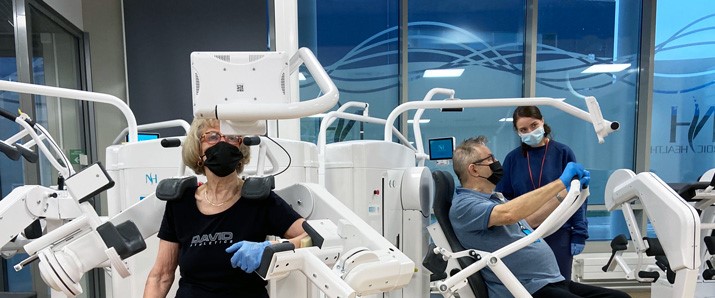
DAVID technology stabilises the pelvis and lumbar spine, eliminates compensations, and ensures:
- Progressive loading
- Controlled end-range exposure
- Joint-specific movement paths
- Individualised restriction based on symptoms
This supports the load-management principles proven effective in the BMJ gluteal tendinopathy trial.
3. Evidence-based Progressive Strengthening
Hip-related pain is strongly associated with reduced strength in:
- Adductors
- Abductors
- Deep stabilizers
- Rotators
The DAVID devices:
- Target gluteus medius/minimus and adductor musculature
- Provide symmetry tracking
- Support endurance, hypertrophy and neuromotor control
- Permit isolated work without pelvic drop or trunk rotation
This aligns with:
-
Doha categories (muscle-specific dysfunction)
4. Structured Rehabilitation for FAI and Labral Disorders
Conservative care is the preferred first step for FAI syndrome, as emphasised by the Warwick Agreement.
DAVID supports this with:
- Controlled flexion/extension work
- Avoiding provocative FADIR-like positions
- Improved neuromuscular control
- Objective progress tracking for return-to-sport decisions
5. Stronger Multidisciplinary Communication Through Data
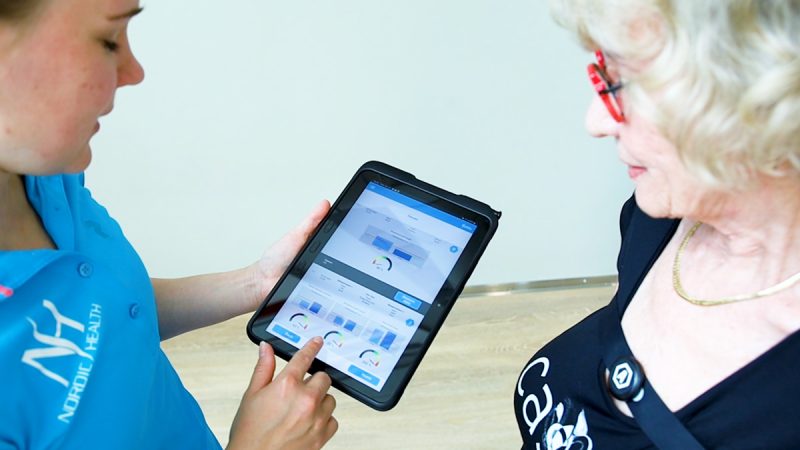
DAVID’s EVE software automatically generates:
- Strength curves
- Mobility trends
- Training adherence reports
- Pain-response patterns
- Load-progression graphs
With this, physiotherapists can present a clear clinical justification to:
- Orthopedic surgeons
- Sports physicians
- General practitioners
- Insurance companies
This supports the Doha and Zurich call for uniformity, standardisation and reproducibility.
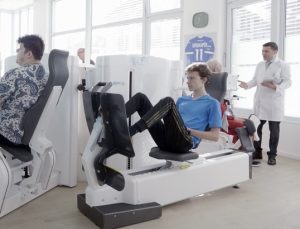
Conclusion
The latest international scientific guidelines are clear:
- Use standardised terminology
- Combine symptoms, clinical tests and imaging — never imaging alone
- Prioritise load management and progressive exercise therapy
- Monitor recovery objectively
- Apply structured, reproducible protocols
The DAVID Hip & Knee Solution is fully aligned with these recommendations, offering:
- Reproducible assessments
- Safe biomechanics
- Objectively measurable progress
- Evidence-based strength and mobility training
- Clear support for clinical and surgical decision-making
This makes DAVID an indispensable tool in modern hip rehabilitation.
References
- Mellor R, Bennell K, Grimaldi A, et al. Education plus exercise versus corticosteroid injection for gluteal tendinopathy: RCT. BMJ, 2018.
- Weir A, Brukner P, Delahunt E, et al. Doha Agreement on terminology and definitions in groin pain in athletes. Br J Sports Med, 2015.
- Reiman MP, Agricola R, Kemp J, et al. IHiPRN Consensus on classification and diagnosis of hip-related pain in young and middle-aged adults. Br J Sports Med, 2020.
- Griffin DR, Dickenson EJ, O’Donnell J, et al. Warwick Agreement on FAI syndrome. Br J Sports Med, 2016.