English


What Is Balance and Why Measuring It Is Complex
Balance is the result of a finely coordinated interaction between three systems:
- The visual system – what we see
- The vestibular system – movement and head position
- The proprioceptive system – information from muscles and joints
This sensory input is processed by the central nervous system and translated into motor responses that keep us upright. When one or more of these systems function less effectively – as is often the case with aging, musculoskeletal complaints, or neurological conditions – postural stability decreases.
Traditional clinical balance tests are valuable, but they are often subjective and have limited sensitivity. This is where objective, sensor-based measurement provides clear added value.
The DAVID Balance Module: Objective Insight into Postural Control
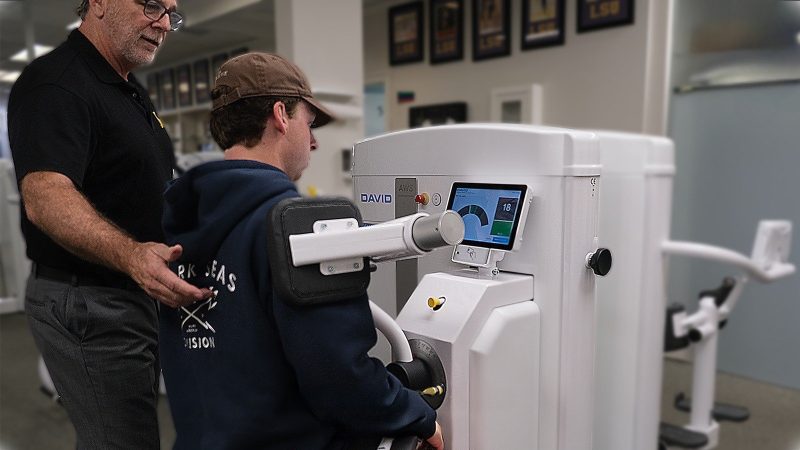
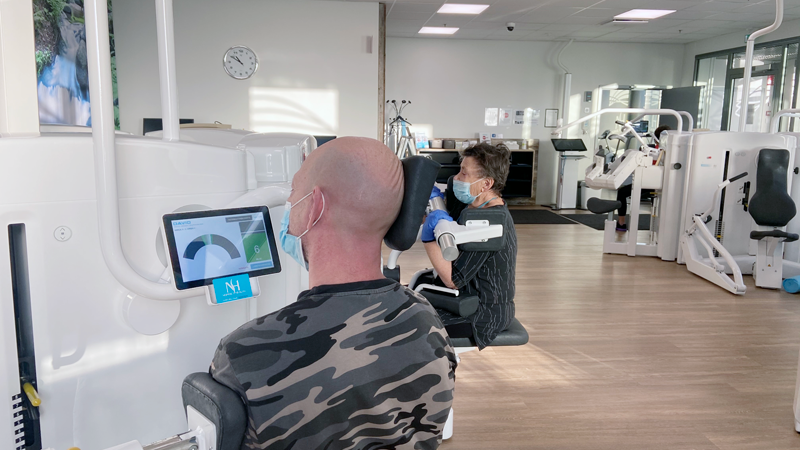
The DAVID Balance Module is a medically certified measurement system that objectively maps postural stability using sensor technology. The main outcome measures include:
- Postural sway distance (primary outcome measure)
- Postural sway speed
- Postural sway area
- Percentile scores compared to a reference population
By using different test conditions – such as feet together, tandem stance, or single-leg stance, on both firm and soft surfaces – balance demand is systematically increased. This enables observation of how a person responds to increasing complexity and altered sensory conditions.
Study Background: Real-World Data from Clinical Practice
To evaluate the performance of the DAVID Balance Module, an observational, retrospective analysis was conducted using real-world data from two primary care settings:
- Leef Center Heerhugowaard (municipality of Dijk en Waard)
- Fysiotherapie Elisabeth (municipality of Alkmaar)
Study Characteristics:
- N = 78 participants
- Age ≥ 65 years
- At least one valid balance measurement
- For longitudinal analyses: at least two measurements per participant
The primary objective was not to demonstrate training effects, but to assess whether the system functions as a valid, discriminative, and responsive measurement instrument in daily clinical practice.
Key Results: What Do the Data Show?
Clear Differentiation Between Balance Conditions
Postural sway increased systematically in more challenging positions (from normal stance to single-leg stance). Statistical analysis showed highly significant differences (p < 0.001) between test conditions. This confirms that the measurement system behaves as expected biomechanically and clinically, supporting its construct validity.
Sensitivity to Sensory Changes
Among participants tested on both firm and soft surfaces, sway distance was significantly greater on the soft surface (p ≈ 0.046; small to moderate effect). This demonstrates that the system reliably detects subtle changes in sensory input crucial for fall risk assessment.
Responsiveness Over Time
Among participants with repeated measurements (T0–T1), a significant difference over time was observed (p ≈ 0.024). Although the direction of change varied per individual and no standardized intervention was recorded, this finding shows that the instrument is sensitive to individual changes – an essential feature for monitoring and evaluation.
No Evidence of Systematic Measurement Bias
Exploratory analyses showed no significant differences between men and women and only a weak, non-significant association with age. This suggests that the measurements are robust and broadly applicable within the older population.
From Measurement to Targeted Care
The true value of balance measurement lies in the follow-up. Within an integrated care pathway, the DAVID Balance Module can be combined with:
- Digital questionnaires (via EVE software)
- Additional clinical outcome measures
- Evidence-based interventions such as Otago and InBalans
- Structured retesting and outcome reporting
This creates a logical pathway from screening → targeted training → objective evaluation, supported by data.
Conclusion: Balance Data as a Driver for Prevention
The combined results from two primary care settings demonstrate that the DAVID Balance Module is a valid, discriminative, and responsive instrument for objective balance assessment in older adults. The system reliably distinguishes among balance conditions, detects temporal changes, and supports data-driven decision-making for fall prevention.
In short, balance is too important to assess by intuition alone. With objective measurement, prevention becomes proactive, and independence can be maintained for longer.