 English


David Health Technology
Business Case
Spine and Orthopaedic centres
Transforming musculoskeletal care
How to build a business case for a spine or orthopaedic centre
Whether you are starting a spine or orthopaedic centre or developing an existing one, you look for ways to grow while providing high-quality care. Patients and referrers increasingly expect treatment whose progress can be measured and reported, and patients also judge how they experience their care. This page outlines how device-based exercise therapy with DAVID Generation Line devices and EVE software can fit into your business model.
This page briefly covers the different pillars of a successful business model in a Spine and Orthopaedic centres:
- Add value for each stakeholder
- Incorporate Device-based Exercise Therapy
- Use exercise devices with measuring functions
- Improve the patient experience
- Build lasting relationships with referrers
- Use EVE software and the patient app
- Invest with common sense
For healthcare professionals. This page describes medical devices and is intended for physiotherapists, physicians, chiropractors and clinic managers.
Add value for each stakeholder
The main stakeholders of a spine or orthopaedic centre are health insurers, patients, staff, referrers and shareholders. A business case works when each of them sees added value:
- Patients benefit from individually dosed, goal-oriented exercise therapy with measurable progress, in a welcoming and well-supervised environment.
- Referrers benefit from a reliable referral relationship, an evidence-based treatment programme and clear reporting.
- Health insurers receive structured documentation of treatment and outcomes to support decisions on care purchasing.
- Shareholders want a profitable, innovative and socially engaged organisation.
- Clinic staff want a positive working environment with varied tasks.
Incorporate Device-Based Exercise Therapy
Exercise therapy is recommended as a first-line treatment for common musculoskeletal conditions (Babatunde OO et al., PLoS One 2017;12(6):e0178621), and clinical guidelines in many countries recommend it as an evidence-based intervention. Whether exercise therapy is suitable for a patient, and how it fits alongside medication or other treatments, is decided by the treating professional.
In recent years, health insurers have gained more influence over the patient’s treatment path. Essential conditions for purchasing care are that treatment is evidence-based, transparent and results-oriented: value for money.
If exercise is medicine, why don’t we know the dose?
Many published exercise studies do not report the training dose in enough detail (Hansford HJ et al., Br J Sports Med 2022;56(12):692–700). With DAVID devices and EVE, the parameters of each session – load, range of motion, repetitions and speed – are recorded automatically. EVE also collects the questionnaires selected by the treating professional and device-based strength and mobility measurements, so outcome data is gathered systematically.
Data can be exported at individual or group level.
References
1. Babatunde OO, Jordan JL, Van der Windt DA, et al. Effective treatment options for musculoskeletal pain in primary care: a systematic overview of current evidence. PLoS One. 2017;12(6):e0178621.
2. Hansford HJ, Wewege MA, Cashin AG, et al. If exercise is medicine, why don’t we know the dose? An overview of systematic reviews assessing reporting quality of exercise interventions in health and disease. Br J Sports Med. 2022;56(12):692–700.
Our solution: exercise devices with measuring functions
The DAVID Exercise Therapy Solution combines Generation Line medical devices with EVE software for the assessment and exercise therapy of musculoskeletal disorders, within the intended purpose of each device. The exercises use targeted movement and controlled loading to strengthen the muscles concerned.
Individualised programmes are based on a questionnaire, a physical assessment and device-based tests. A trained professional assesses suitability, checks contraindications and sets the load, range of motion and progression. Exercise may cause temporary muscle soreness. See the instructions for use for contraindications and precautions.
- Automatic Weight Selection (AWS) on equipped models
- Automatic seat adjustment (electronic versions)
- Isolated movement
- Supportive fixations
- Biomechanically designed movement
- Example – G110 Lumbar/Thoracic Extension: exercises the lumbar/thoracic spine in the sagittal plane, targeting the extensor muscles
Turn quality care into a competitive advantage by documenting the care you provide with objective data.
User experiences
DAVID develops exercise therapy devices and software for physiotherapy practices, hospitals, chiropractic practices, rehabilitation centres and military training facilities. Clinics and hospitals in 49 countries use the DAVID Exercise Therapy Solution.
“The DAVID Spine Solution revolutionises physiotherapy by making it active, measurable and targeted.”
Dr Pedro Berjano, MD, PhD, CEO of OrthoSpine, Monza, Italy

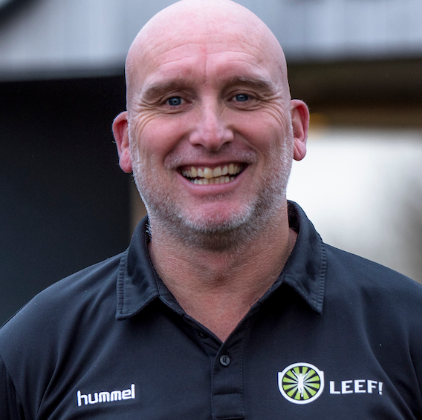
In 2008, Gilbert van den Berg opened a physiotherapy practice in Heerhugowaard. It has since grown into a lifestyle concept with three locations in North Holland. DAVID devices are installed at all locations and form a key part of the concept.
Gilbert van den Berg, BsC CEO of Lifestyle Center
Improve the patient experience
In recent years there has been a significant transition within the healthcare sector. The patient who used to listen attentively to the physician has increasingly developed into a critical healthcare consumer. It is a collaboration between the physician, physiotherapist and patient.
The patient requires a result-oriented transparent treatment that can be quantified. However, not only is the result essential but the patient also experiences:
- Staff expertise
- Look and feel of the facility
- Quality of the training equipment
- Attention from clinic staff during treatment
- Quality-to-price ratio of the treatment
- Ability to follow their own progress
- A welcoming, well-supervised environment
These factors shape the patient experience and help you differentiate your clinic from the competition.
Build lasting relationships with referrers
Referrers like to enter into an ongoing relationship with clinics. The most important points include:
- Evidence-based treatment
- Clear and transparent reporting
- Objective outcomes of treatment benefits
- Satisfied patients
Our Solution
EVE gives insight into each patient’s treatment and results and helps you report on the therapy provided, through:
- Automatically compiled results of questionnaires and strength and mobility tests
- Graphical display of exercise parameters (speed, range of motion, repetitions)
- A final report for the referrer
Data is available for reporting and analysis, and authorised users can retrieve an up-to-date status of each patient.
Use EVE as a virtual assistant
The therapist’s intrinsic motivation is to provide care. In recent years, however, working conditions have come under pressure: less time per patient, higher patient volumes and a growing administrative burden. How can EVE software help automate processes?
On the device terminal, EVE guides patients through their exercises, while the therapist supervises through an interactive dashboard. This helps the therapist give attention to the patients who need extra help. EVE supports programme progression based on the patient’s recorded performance and feedback; the treating professional remains responsible for the programme, the level of supervision and progression.
Advantages of working with EVE:
- More efficient use of therapist time
- Data is saved automatically for reporting
- Exercise quality (range of motion, speed, repetitions) is monitored for every set
- Physicians and physiotherapists have more time for patients who need help
- Less administrative work, more variety for the therapist
- Therapists can focus on their expertise and skills
Invest with common sense
Why invest in exercise therapy? Population ageing, longer life expectancy and lifestyle-related conditions such as obesity, diabetes, cardiovascular disease and musculoskeletal problems are increasing the demand for physiotherapy. With growing patient numbers and rising healthcare costs, providers need to work efficiently.
Many health systems report a shortage of healthcare workers, and this is expected to continue. Technology that reduces manual set-up and documentation can help providers use therapist time where it is needed most.
The economic impact of adding DAVID to an existing spine or orthopaedic centre or a new facility depends on local factors such as reimbursement, caseload and staffing. Factors that can contribute include:
- More efficient use of therapist time
- Reduced administrative burden
- Improved patient experience
- Stronger market position
- Satisfied patients who recommend your clinic
After treatment, you can offer follow-up training memberships outside insurance-funded care, with programmes coordinated in EVE. A trained professional decides for each person whether they are suitable to train with reduced supervision and sets the level of supervision.
Company prevention programmes are another option: employees are tested and trained on the devices, with individual graphical reports for each employee and, for employers, anonymised analyses of absenteeism and risk.
Illustrative example – not a forecast or study result. Monthly contribution = (supervised sessions per month × fee per session) − (device financing + EVE licence + staff time + space costs). Example inputs to replace with your own: 6 devices, 2 supervising professionals, local reimbursement or membership fee. Ask DAVID for a business case based on your figures.
Deliver value for patients affordably
Quality care does not need to be expensive to deliver. Healthcare professionals can focus on patients’ motivation and well-being while the devices and EVE handle repetitive tasks such as set-up, load selection and recording. Most professional time is needed in the first sessions, when a patient is assessed and introduced to the system; after that, the professional supervises and reviews progress at the level they consider appropriate.
Manage your centre – anytime, anywhere
The cloud service is the heart of the software platform. All training information is stored centrally, so treatment data can be analysed in full. Authorised users can access the system with a web browser from any location. Functions include profile analysis, quality tracking of each movement, and qualitative and quantitative data for centre management.
EVE processes patient data. Data is processed in accordance with the GDPR; see our privacy and data-processing information.
Furnishing your spine or orthopaedic centre
Furnishing a spine or orthopaedic centre involves many decisions. How do you set up a centre for the future, and what equipment do you need? DAVID has experience in setting up small, medium and large clinics.
Device-based exercise therapy with measured data can support the prevention and treatment of postural and musculoskeletal complaints within the intended purpose of each device. When planning capacity, consider how many patients can progress to training with reduced supervision. The figures below are an illustrative planning example, not study results.
Illustrative planning example (not a study result; replace with your own data): of 100 patients, about 40 might train with reduced supervision after 2 introductory sessions and about 30 after 5 sessions; about 20 prefer to train in a group; about 5 prefer neither; and about 5 are not suitable for training without direct supervision.
With DAVID devices and EVE, patients assessed as suitable can follow adaptive programmes with the level of supervision set by the treating professional.
We are happy to discuss a business case and a 3D layout for your spine or orthopaedic centre.
Generation Line medical devices (except G250): Class Im, CE 0598, MDD 93/42/EEC. The G250 is a training device, not a medical device. Use the devices within the intended purpose stated in the instructions for use; read the instructions for use for contraindications and precautions. Exercise may cause temporary muscle soreness. Availability differs by country.
Transforming musculoskeletal care
Download our Ebook