English


Research
Objective Although exercise therapy is safe, effective, and recommended as a nonpharmacological treatment for axial spondyloarthritis (axSpA), there is a lack of guidelines regarding type and dosage. Insufficient knowledge about physical and physiological variables makes designing effective exercise programs challenging. Therefore, the goal of this study was to simultaneously assess trunk strength, spinal mobility, and the cardiorespiratory fitness of patients with axSpA.
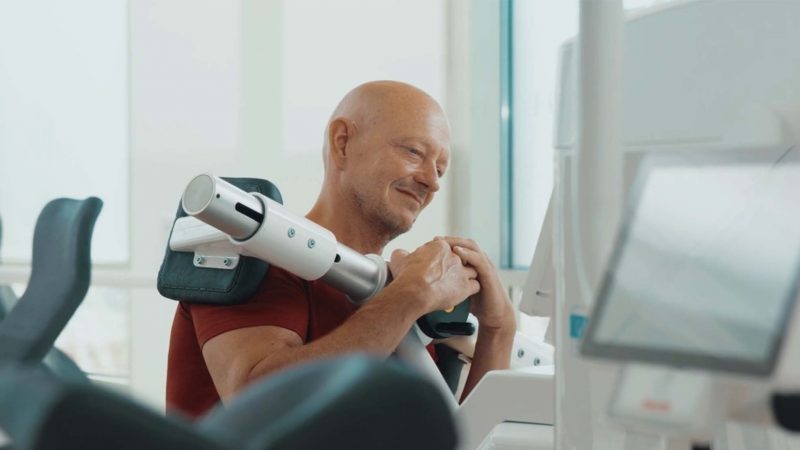
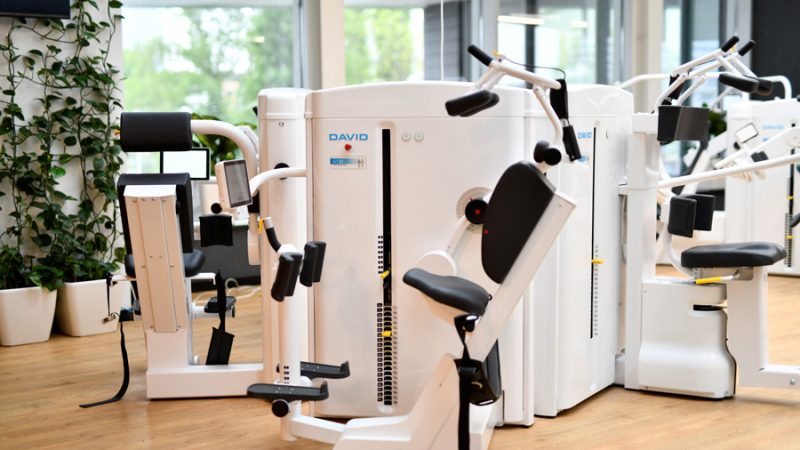
Methods In a cross-sectional study, 58 patients with axSpA (mean age 40.8 yrs, 50% male, mean symptom duration 10.3 yrs) performed maximal cervical and trunk mobility and isometric strength tests in all planes (using David Back Concept devices) and a maximal cardiopulmonary bicycle exercise test (n = 25). Mobility and strength data were compared to healthy reference data. Cut-off values for clinical cardiopulmonary exercise testing interpretation were used to judge normality. Patients were compared based on radiographic involvement and symptom duration.
Results Both strength (P ≤ 0.02) and mobility (P ≤ 0.001) were significantly lower for the patients with axSpA compared to the reference. Strength deficits were comparable between the radiographic and nonradiographic groups (P > 0.05, except trunk extension [P = 0.03]), whereas mobility showed higher deficits in the radiographic group (cervical extension [P = 0.02] and rotation [P = 0.01], and trunk extension [P = 0.03] and rotation [P = 0.03]), regardless of symptom duration. Similarly, symptom duration positively affected oxygen pulse (P = 0.03), relative anaerobic threshold (P = 0.02), and aerobic capacity (P = 0.02).
Conclusion In patients with axSpA, strength is more affected than mobility when compared to healthy controls. Likewise, mainly the metabolic component of aerobic capacity is impaired, affecting cardiopulmonary fitness. These findings indicate that future personalized exercise programs in patients with axSpA should incorporate exercises for cardiopulmonary fitness next to strength and mobility training.
Reference:
De Mits S, Willems T, Calders P, Danneels L, Varkas G, Van den Bosch F, Elewaut D, Carron P. Patient-tailored training programme on cardiorespiratory fitness, trunk strength and mobility leads to significantly better outcomes in individuals with axial spondyloarthritis. RMD Open, December 2025. PMID: 41475840. DOI: 10.1136/rmdopen-2025-006039 · PubMed