English


Why Protocol Matters More Than Ever
ACL reconstruction has a high surgical success rate, but return-to-sport outcomes remain a persistent challenge. Research consistently shows that between 15% and 25% of athletes who return to sport suffer a re-rupture — often within the first two years. This sobering statistic has pushed the rehabilitation community to look critically at what happens after surgery, not just during it.
The evidence now points clearly in one direction: premature return to sport, inadequate neuromuscular training, and time-based (rather than criteria-based) discharge decisions are the primary drivers of re-injury. Fixing these problems starts with the rehabilitation protocol itself.
Phase 1: Acute Management and Early Mobilisation (Weeks 0–2)
Gone are the days of prolonged immobilisation following ACL reconstruction. Current evidence strongly supports early weight-bearing and range-of-motion work beginning within the first 24 to 48 hours post-surgery, provided the patient is cleared by their surgical team.
Key goals in this phase include managing swelling and pain, achieving full passive knee extension, beginning quadriceps activation, and restoring normal gait as quickly as safely possible.
Early cryotherapy and compression remain standard. More significantly, voluntary quadriceps contractions — simple straight-leg raises and quad sets — have been shown to reduce the risk of significant muscle atrophy in the early weeks, a problem that can haunt patients many months into recovery if not addressed immediately.
Phase 2: Strength and Neuromuscular Foundation (Weeks 2–12)
This phase is where the most meaningful progress is made, and where under-loading remains the most common clinical mistake. The 2026 evidence base makes a strong case for progressive resistance training, particularly of the quadriceps and hamstrings, begun earlier and progressed more aggressively than older protocols recommended.
Quadriceps strength is now recognised as one of the single most important predictors of successful return to sport. Studies confirm that patients who achieve a limb symmetry index (LSI) of 90% or greater in quadriceps strength are significantly less likely to re-rupture.
Neuromuscular control, the ability of the nervous system to coordinate joint-stabilising muscles quickly and accurately, is equally critical. Balance training, proprioceptive exercises, and perturbation training should be introduced progressively from around weeks four to six.
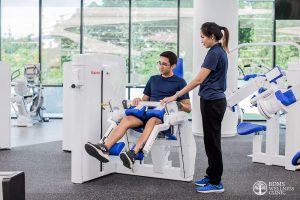
Closed-chain exercises such as squats, leg press, and step-ups are preferred over open-chain exercises in the early-to-mid stages. Open-chain knee extensions performed in a restricted range (from 90 degrees to roughly 45 degrees of flexion) are safe from approximately week 12 in most graft types and carry significant benefit for quadriceps recovery.
Phase 3: Running, Plyometrics, and Sport-Specific Training (Months 3–6)
Return to running is a milestone that patients understandably look forward to. Evidence-based criteria for initiating a graduated running programme typically include full pain-free range of motion, absence of effusion, and quadriceps LSI of at least 70%. Running before these criteria are met increases load on an incompletely matured graft and elevates re-injury risk.
Once running is established, plyometric training becomes the next cornerstone. Plyometrics, jump training, bounding, lateral cutting, are essential for rebuilding the explosive neuromuscular capacity required for most sports. A well-designed plyometric progression moves from bilateral to unilateral exercises, from low to high load, and from predictable to reactive environments.
A significant development in recent research is the growing emphasis on cognitive load during rehabilitation. Training the athlete to make rapid decisions while executing physical tasks more closely mirrors the demands of actual sport and has been associated with better on-field outcomes.
Phase 4: Return-to-Sport Criteria (Months 6–9+)
Perhaps the most important evolution in ACL rehabilitation thinking in recent years is the shift from time-based to criteria-based return to sport. Current best-practice guidelines recommend that return to full sport should only occur when the following criteria are met:
- Quadriceps LSI of 90% or greater compared to the uninjured limb
- Hamstring LSI of 90% or greater
- Single-leg hop test battery all achieving 90% LSI or above
- Satisfactory performance on psychological readiness assessments such as the ACL-RSI scale
- No pain or effusion with sport-specific loading
- Successful completion of a graduated return-to-training programme
The inclusion of psychological readiness is not a soft add-on. Research has repeatedly demonstrated that athletes with low confidence in their knee and high fear of re-injury have substantially worse outcomes, regardless of their physical test scores.
The Role of Blood Flow Restriction Training
Blood flow restriction (BFR) training has moved from the fringes to the mainstream in ACL rehabilitation. By applying a pneumatic cuff to restrict venous return while exercising at relatively low loads, BFR enables meaningful muscle hypertrophy and strength gains even in the early post-operative period when heavy loading is contraindicated.
Multiple systematic reviews now support its use as a safe and effective adjunct, particularly in phases one and two when patients cannot tolerate conventional high-load resistance training.
Graft Type Considerations
The choice of graft — whether patellar tendon (BPTB), hamstring tendon, or quadriceps tendon — has rehabilitation implications that are increasingly well understood.
Hamstring graft patients typically need more attention paid to early hamstring strength deficits. Quadriceps tendon grafts show excellent outcomes but may require specific attention to anterior knee discomfort in early loading phases. Your rehabilitation clinician should adjust your programme to reflect your specific graft choice, rather than applying a one-size-fits-all template.
Prevention: The Overlooked Opportunity
The same neuromuscular principles that drive effective ACL rehabilitation — strength, balance, landing mechanics, and movement control — also substantially reduce the risk of primary injury. Programmes such as FIFA 11+ have demonstrated significant reductions in ACL injury rates when consistently implemented. For athletes returning from ACL injury, a long-term injury prevention programme is part of the continuum of care, not an optional extra.
Conclusion
ACL rehabilitation in 2026 is more evidence-informed, more individualised, and more outcomes-focused than at any previous point in its history. The central message from the literature is consistent: respect the biology of graft healing, build strength and neuromuscular control systematically, use criteria rather than calendars to guide progression, and take psychological readiness as seriously as physical readiness.
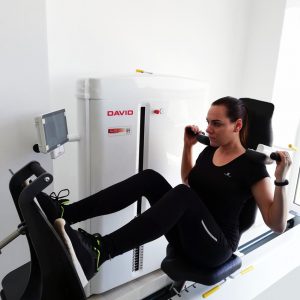
At David Health Solutions, our approach integrates all of these principles into rehabilitation programmes tailored to each individual patient — their graft type, their sport, their lifestyle, and their goals. Recovery from ACL injury is not simply about getting back to where you were. Done well, it is an opportunity to come back stronger, more resilient, and better prepared for the demands ahead.
David Health Solutions provides evidence-based Exercise Equipment. This article is for informational purposes and does not constitute individual medical advice. Please consult your treating clinician for guidance specific to your circumstances.
References
- Ardern CL, Glasgow P, Schneiders A, et al. 2016 Consensus statement on return to sport from the First World Congress in Sports Physical Therapy, Bern. British Journal of Sports Medicine. 2016;50(14):853–864.
- Grindem H, Snyder-Mackler L, Moksnes H, Engebretsen L, Risberg MA. Simple decision rules can reduce reinjury risk by 84% after ACL reconstruction: the Delaware-Oslo ACL cohort study. British Journal of Sports Medicine. 2016;50(13):804–808.
- Kyritsis P, Bahr R, Landreau P, Miladi R, Witvrouw E. Likelihood of ACL graft rupture: not meeting six clinical discharge criteria before return to sport is associated with a four times greater risk of rupture. British Journal of Sports Medicine. 2016;50(15):946–951.
- Logerstedt DS, Snyder-Mackler L, Ritter RC, Axe MJ. Knee stability and movement coordination impairments: knee ligament sprain. Journal of Orthopaedic and Sports Physical Therapy. 2010;40(4):A1–A37.
- Myer GD, Paterno MV, Ford KR, Quatman CE, Hewett TE. Rehabilitation after anterior cruciate ligament reconstruction: criteria-based progression through the return-to-sport phase. Journal of Orthopaedic and Sports Physical Therapy. 2006;36(6):385–402.
- Paterno MV, Rauh MJ, Schmitt LC, Ford KR, Hewett TE. Incidence of contralateral and ipsilateral anterior cruciate ligament (ACL) injury after primary ACL reconstruction and return to sport. Clinical Journal of Sport Medicine. 2012;22(2):116–121.
- Patterson BE, Culvenor AG, Barton CJ, et al. Worsening knee function during rehabilitation following anterior cruciate ligament reconstruction. British Journal of Sports Medicine. 2020;54(5):286–294.
- Pinto BL, Ferreira EAG, Guimarães GL, et al. Blood flow restriction training in rehabilitation after anterior cruciate ligament reconstruction: a systematic review and meta-analysis. Journal of Strength and Conditioning Research. 2023;37(4):921–933.
- Reiman MP, Bjordal JM, Ljunggren AE, Aaas E. Blood flow restriction training for the anterior cruciate ligament-reconstructed knee: a systematic review and clinical commentary. International Journal of Sports Physical Therapy. 2021;16(3):839–857.
- Roi GS, Nanni G, Tavana R, Tencone F. Prevalence of anterior cruciate ligament reconstructions in professional football players. British Journal of Sports Medicine. 2010;44(Suppl 1):i9.
- Roos EM, Roos HP, Lohmander LS, Ekdahl C, Beynnon BD. Knee injury and osteoarthritis outcome score (KOOS): development of a self-administered outcome measure. Journal of Orthopaedic and Sports Physical Therapy. 1998;28(2):88–96.
- Schmitt LC, Paterno MV, Ford KR, Myer GD, Hewett TE. Strength asymmetry and landing mechanics at return to sport after anterior cruciate ligament reconstruction. Medicine and Science in Sports and Exercise. 2015;47(7):1426–1434.
- Silbernagel KG, Brorsson A, Lundberg M. The majority of patients with Achilles tendinopathy recover fully when treated with exercise alone. American Journal of Sports Medicine. 2011;39(3):607–613.
- Söderström J, Korhonen L, Karttunen P, Parkkari J, Kannus P. Trends in ACL reconstruction rates in Finland from 2006 to 2020: a nationwide registry-based study. Knee Surgery, Sports Traumatology, Arthroscopy. 2023;31(2):601–608.
- Thoma LM, Grindem H, Logerstedt D, et al. Coper classification early after anterior cruciate ligament rupture changes with progressive neuromuscular and strength training and is related to 2-year success. American Journal of Sports Medicine. 2019;47(4):807–814.
- van Melick N, van Cingel REH, Brooijmans F, et al. Evidence-based clinical practice update: practice guidelines for anterior cruciate ligament rehabilitation based on a systematic review and multidisciplinary consensus. British Journal of Sports Medicine. 2016;50(24):1506–1515.
- Webster KE, Feller JA. A research update on the state of play for return to sport after anterior cruciate ligament reconstruction. Journal of Orthopaedic and Sports Physical Therapy. 2019;49(3):124–131.
- Wellsandt E, Failla MJ, Snyder-Mackler L. Limb symmetry indexes can overestimate knee function after anterior cruciate ligament injury. Journal of Orthopaedic and Sports Physical Therapy. 2017;47(5):334–338.
- Wilk KE, Macrina LC, Cain EL, Dugas JR, Andrews JR. Recent advances in the rehabilitation of anterior cruciate ligament injuries. Journal of Orthopaedic and Sports Physical Therapy. 2012;42(3):153–171.
- Zwolski C, Quatman-Yates C, Paterno MV. Resistance training in youth: laying the foundation for injury prevention and physical literacy. Sports Health. 2017;9(5):436–443