English


The Cervical Curve: Why It Matters
The cervical spine is designed with a natural inward curve, called cervical lordosis , that acts as a shock absorber, keeps the neural foramina open, and distributes axial loads evenly. When that curve is lost or reversed, the consequences ripple outward: increased stress on intervertebral discs and ligaments, compensatory strain in the thoracic and lumbar spine, restricted mobility, and chronic pain.
Research by McAviney et al. (2005) found that individuals with cervical lordosis below 20° were significantly more likely to suffer from chronic neck pain than those within the normal range of 31°–40°. Harrison et al. (1996) similarly highlighted the biomechanical importance of this curve in maintaining functional head posture and minimizing stress on surrounding structures.
The clinical implication is clear: restoring and maintaining cervical lordosis is not cosmetic, it is fundamental to pain relief and long-term spinal health.
The Limits of Traditional Assessment
For decades, physiotherapists have relied on visual posture analysis, manual muscle testing, and goniometry to evaluate cervical dysfunction. These tools are useful, but they share a critical weakness: subjectivity. Results vary between clinicians, progress is difficult to quantify, and subtle neuromuscular asymmetries can go completely undetected. This makes it genuinely difficult to design truly personalized rehabilitation programs or to demonstrate objective improvement over time, both to the patient and within clinical records.
Where DAVID Devices Come In
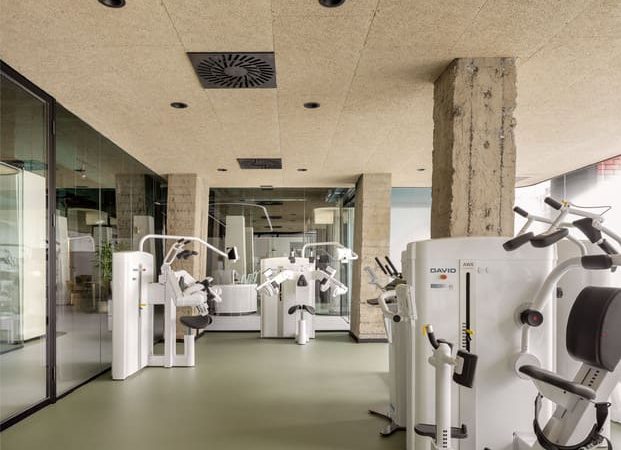
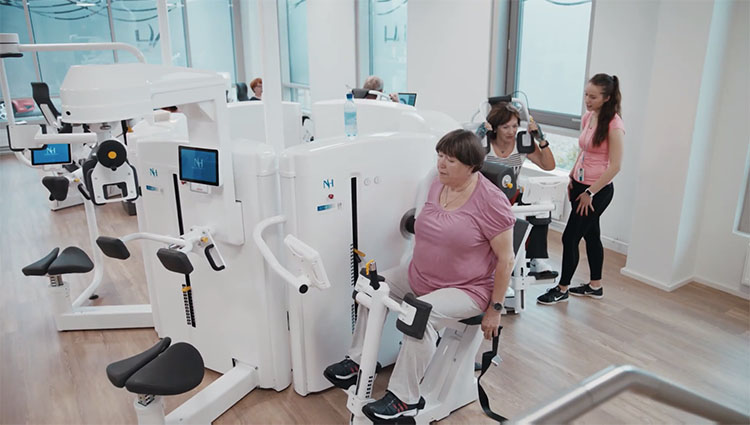
This is precisely where DAVID devices add transformative value to the clinical workflow. While structural parameters like Cobb’s angle still require radiographic imaging, DAVID’s technology provides something equally essential: precise, reproducible, objective data on the functional state of the cervical spine.
Specifically, DAVID devices measure:
- Cervical range of motion (ROM) across all movement planes
- Isometric muscle strength in flexion, extension, and lateral directions
- Movement symmetry, detecting left-right imbalances that manual assessment often misses
This functional data maps directly onto the impairments that drive mechanical neck pain. A patient may present with normal imaging but show measurable ROM restriction, deep cervical flexor weakness, or pronounced muscular asymmetry, all of which contribute to abnormal spinal loading and postural breakdown. DAVID devices surface these findings reliably, visit after visit.
Research supports this approach. Suni et al. (2018) found that patients whose treatment was guided by objective, device-based assessment experienced greater improvements in mobility and pain compared to those evaluated using traditional manual techniques alone. MacIntyre et al. (2018) further observed that device-driven assessments improved patient compliance, goal tracking, and the ability to modify interventions with data-driven insight.
A Complete Conservative Management Framework
The Chandra et al. commentary outlines a comprehensive conservative management approach that integrates well with DAVID device assessment. The key pillars are:
Manual Therapy
Joint mobilizations to restore segmental cervical and thoracic mobility, combined with myofascial release targeting the suboccipitals, levator scapulae, and upper trapezius — structures commonly overloaded in forward head posture.
Postural Correction & Ergonomic Training
Biofeedback-assisted retraining of neutral cervical alignment, supported by practical ergonomic guidance: screens at eye level, structured movement breaks every 20 minutes, and education on safe lifting mechanics.
Therapeutic Exercise
Deep cervical flexor activation using cranio-cervical flexion protocols, isometric stabilization holds, and thoracic mobility work. DAVID’s objective strength data allows therapists to prescribe loading parameters precisely and progress them safely based on measured outcomes.
Strengthening & Integration
Scapular stabilizer training and core activation to reinforce upper-quarter alignment, because cervical rehabilitation cannot be viewed in isolation from the rest of the kinetic chain.
Measuring What Matters
Combining subjective and objective outcome measures gives clinicians, and patients, a complete picture of progress:
- NPRS (Numeric Pain Rating Scale) for pain intensity
- NPAD (Neck Pain and Disability Index) for functional limitation
- DAVID device data for ROM and isometric strength — tracked objectively across sessions
- Photogrammetric postural analysis for non-radiographic alignment assessment
- Cobb’s angle (where radiographic imaging is indicated) for long-term structural change
Together, these measures connect structural and functional findings to what patients actually experience — and make it possible to demonstrate the value of intervention clearly.
The Bottom Line
The Chandra et al. commentary puts it plainly: physiotherapists must move beyond subjective assessment and embrace objective, device-based evaluation as a standard part of clinical practice. Not as a replacement for clinical expertise, but as a tool that makes that expertise more precise, more accountable, and more effective. At DAVID Health, this integration is built into everything we do. Our devices don’t just generate data, they enable therapists to detect the specific deficits driving each patient’s pain, design targeted interventions, and track outcomes with confidence.
The future of spinal care is not a choice between technology and clinical skill. It is both, working together.
Based on: Chandra BM, Tadagonda SK, Damerla T, Pagidimarry NK. Conservative Physiotherapy and Nordic Health Devices in Cervical Curve Regulation for Neck Pain Relief: A Commentary. EAS J Orthop Physiother. 2025;7(3):43–46.