English


What the research says about strength and ageing
- The European sarcopenia consensus (EWGSOP2) made low muscle strength the primary parameter for probable sarcopenia, ahead of muscle mass (Cruz-Jentoft et al., 2019).
- In the PURE study of nearly 140,000 adults in 17 countries, every 5 kg lower grip strength was associated with a 16% higher risk of death from any cause (Leong et al., 2015). That is an association, not proof that training changes individual risk, but it shows why strength matters as a signal.
- Fewer than one in ten US adults aged 65+ met the guideline of strength training twice a week (Kraschnewski et al., 2016).
Strength matters, it can be measured, and most of your target group isn’t training it yet.

Why “feeling stronger” isn’t enough
Early strength gains are real but quiet. Nobody notices they push 8 kg more on the leg press unless someone shows them. That’s where studios lose people: the workout was fine, the feedback was missing. When strength becomes a number on a screen:
- Progress becomes a conversation (“this is where you started, this is where you are”).
- Individual loading is based on a real starting point, not a guess.
- Your offer stands out. “We measure your strength and show you how it develops” is not the same as “strength training for 50+”.
Making strength measurable on the studio floor
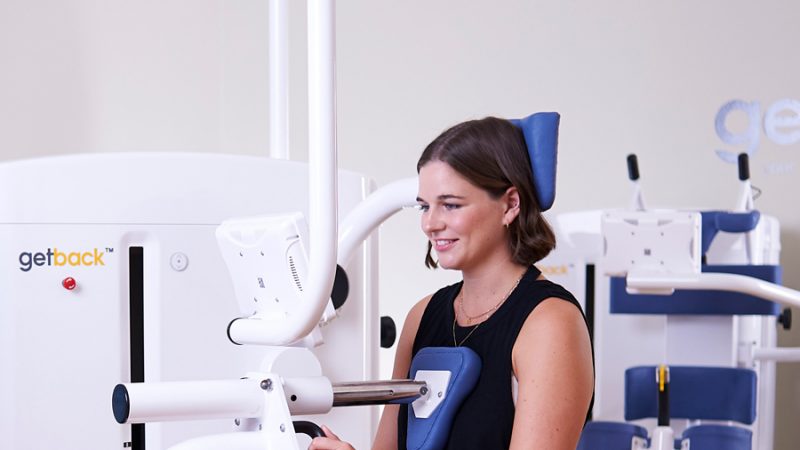
Baseline at onboarding. Automatic data capture per repetition, with no extra admin. Re-checks every 8–12 weeks. A progress view the member can see. That is how the DAVID is designed: joint-specific training with controlled load curves and automatic data on every repetition. These are the principles DAVID has used in clinical rehab for decades.
What this means for your business
The 50+ and 60+ segment is growing, has time and spending power, and wants confidence that training is safe, suits them and works. Measured strength answers that directly. It also gives you marketing content, a structured reason for coach check-ins, and premium positioning that standard equipment can’t copy.
Practical takeaways: treat strength as a key metric alongside attendance · give every new member a baseline and book their first re-check on day one · make progress visible to the member · use the re-check as your main retention conversation · talk about independence, not fear of decline.