English


Skeletal Muscle Dysfunction: A Core Problem in Lung Disease
Chronic lung disease is increasingly recognised as a systemic condition, not merely a pulmonary one. A comprehensive review by Franssen et al. (2017) describes skeletal muscle dysfunction as a key extrapulmonary feature, particularly in COPD.
Patients commonly present with:
- reduced muscle strength
- decreased endurance and oxidative capacity
- early fatigue
- altered muscle fiber composition
Importantly, these impairments are only partly explained by lung function and are strongly related to inactivity, deconditioning and systemic disease effects.
“Skeletal muscle dysfunction is a key extrapulmonary feature of chronic obstructive pulmonary disease and an important target for treatment.” Franssen et al., 2017
Clinical implication: Improving lung function alone will not restore functional capacity. Muscle performance must be assessed and trained deliberately.
Functional Muscle Testing in Vulnerable Lung Patients: What Is Feasible?
The need for objective, reliable and safe assessment tools in pulmonary populations becomes even more apparent in complex patients, such as those recovering from lung transplantation.
A study by Kienbacher et al. (2017) investigated the feasibility and reliability of functional muscle tests in lung transplant recipients shortly after surgery. Fifty patients were assessed using:
- maximum isometric DAVID back extension strength
- handgrip strength
- Biering–Sørensen trunk endurance testing
Key findings:
- Maximum isometric back extension testing was highly feasible and reliable, even shortly before hospital discharge
- Handgrip strength showed a strong correlation with trunk strength
- Trunk endurance testing (Biering–Sørensen) was less viable and should be limited to selected patients
- No significant adverse events occurred during strength testing
“Well-controlled maximum back strength testing is feasible and reliable in lung transplant recipients shortly before hospital discharge.”
Kienbacher et al., 2017
Clinical implication:
Carefully controlled strength testing is safe and clinically meaningful, even in highly vulnerable lung patients—provided it is well standardised and monitored.
Why This Matters for Pulmonary Rehabilitation
Together, these studies underline a crucial point:
- Muscle dysfunction is central to functional limitation
- Strength can be safely assessed and trained, even early after severe illness or surgery
- Reliable, controlled testing is essential for proper exercise prescription
However, traditional exercise testing and free-weight training often lack the precision, reproducibility and safety margins required for these populations.
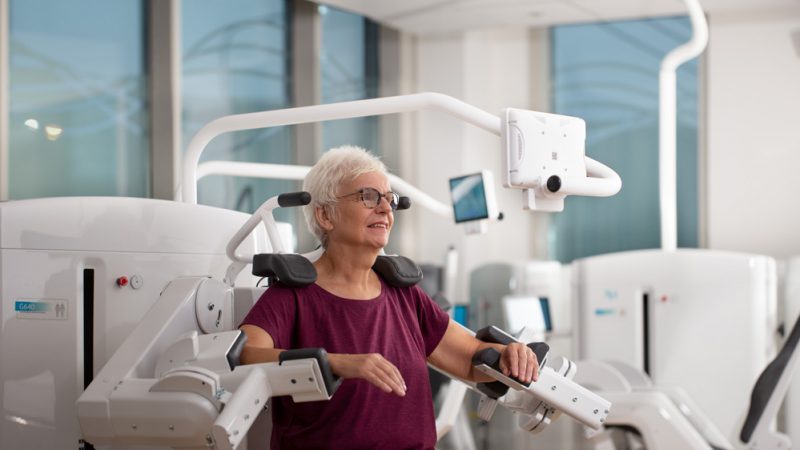
How DAVID Supports Evidence-Based Lung Rehabilitation
1. Safe, Controlled Strength Assessment
DAVID systems enable well-controlled, reproducible strength testing, directly reflecting the recommendations from Kienbacher et al.:
- fixed movement paths
- adjustable range of motion
- precise load control
This allows clinicians to objectively assess muscle function without exposing patients to unnecessary risk.
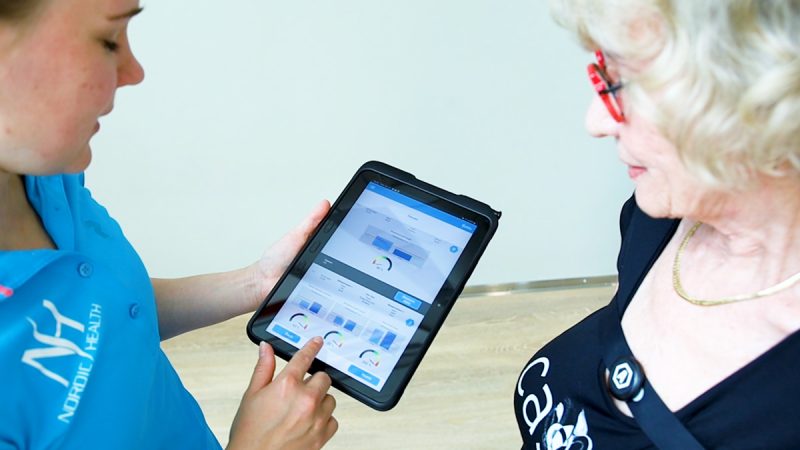
2. Objective Training Prescription Based on Measured Capacity
Both cited studies emphasise the importance of matching exercise intensity to actual muscle capacity. DAVID supports this by:
- linking training loads to measured strength values
- enabling gradual, measurable progression
- reducing reliance on subjective estimation
This is particularly valuable in patients with limited ventilatory reserve or post-transplant recovery.
3. Improving Functional Capacity Beyond Endurance
Daily activities such as standing up, stair climbing or carrying objects depend largely on muscle strength and neuromuscular control, not lung function alone.
DAVID allows clinicians to target:
- trunk and lower-limb strength
- functional movement patterns
- postural control and stability
This directly addresses the functional limitations described in both studies.
4. Balance and Stability as Part of Lung Care
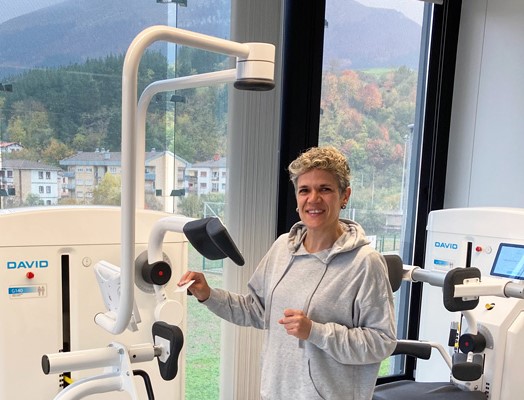
Muscle weakness and inactivity also increase the risk of falls in patients with chronic lung disease. The DAVID Balance System enables:
- Objective balance assessment
- identification of neuromuscular deficits
- targeted balance and stability training
This is especially relevant in older patients, post-ICU populations and lung transplant recipients.
Translating Research Into Daily Clinical Practice
The combined evidence from Franssen et al. and Kienbacher et al. leads to a clear conclusion:
- Chronic lung disease requires a whole-body rehabilitation approach
- Muscle strength is measurable, trainable and clinically relevant
- Safe, standardised systems are essential for vulnerable populations
DAVID enables clinicians to operationalise these insights by providing:
- structured strength and functional training
- objective assessment and monitoring
a safe environment for patients with limited respiratory capacity
Conclusion: From Lung Function to Functional Independence
Effective treatment of patients with chronic lung conditions requires a shift in focus:
from respiratory limitation → to functional capacity
By integrating controlled strength testing, progressive resistance training and balance assessment, clinicians can significantly improve:
- physical independence
- confidence in movement
- quality of life
DAVID supports this evidence-based approach with a safe, measurable, and scalable solution suitable for pulmonary rehabilitation, post-transplant care, and long-term respiratory management.
Scientific References
Franssen FME, Rochester CL, Woodruff PG, et al.
Skeletal muscle dysfunction in chronic obstructive pulmonary disease. Nature Reviews Disease Primers. 2017.
Kienbacher T, Achim-Gunacker G, Pachner M, et al.
Feasibility and reliability of functional muscle tests in lung transplant recipients. American Journal of Physical Medicine & Rehabilitation. 2017.