English


The MSK Cost Problem Insurance Cannot Ignore
Back and neck pain alone accounts for billions of euros in direct and indirect healthcare costs every year across Europe. The numbers that should concern insurers most are not the acute episodes, they are the chronic cases:
- Patients who cycle repeatedly through primary care, physiotherapy, and pain clinics without resolution.
- Workers on long-term sick leave, driving disability and productivity costs borne partly by insurers.
- Surgical candidates whose outcomes often underperform conservative alternatives, at a fraction of the cost.
- Imaging and diagnostic overuse triggered by subjective symptom reports rather than objective functional data.
The chronic MSK patient represents the highest lifetime cost per member in most insurer portfolios. Reducing chronicity is the most powerful lever available.
What Is DAVID Exercise Therapy?
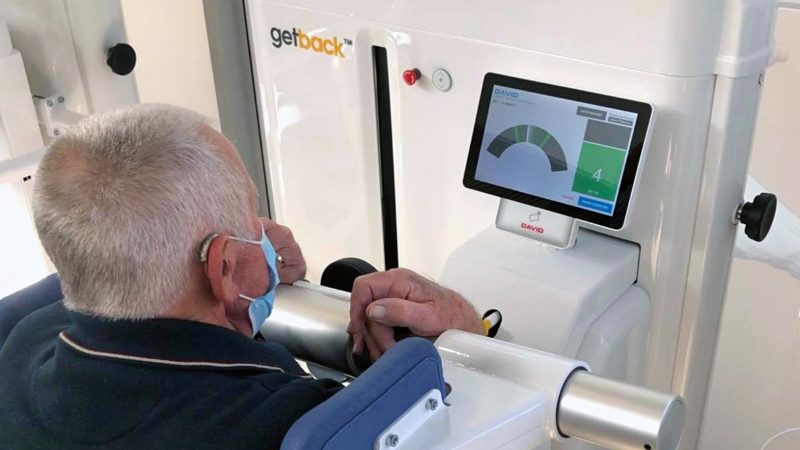
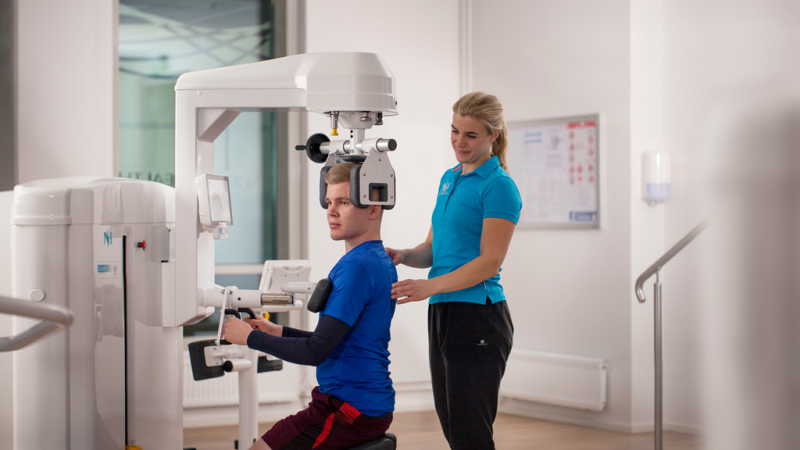
DAVID Health Solutions produces a range of devices (Medical Class 1m) with measuring function (Directive 93/42/EEC) designed for evidence-based rehabilitation of the spine, hip, knee and shoulder. Each device isolates and strengthens the specific muscle groups responsible for spinal stability and joint function, the deep stabilisers that passive treatments like massage, heat, and manual therapy cannot effectively reach.
What distinguishes DAVID from conventional physiotherapy equipment is its software-integrated data capture. Every session generates objective, reproducible measurements of range of motion, strength, and symmetry, creating a clinical data trail that is valuable not only for treating clinicians but for insurers seeking evidence of treatment progress and functional outcomes.
The Clinical Evidence Base
DAVID Exercise Therapy is among the most thoroughly studied active rehabilitation modalities for spinal disorders. The evidence consistently demonstrates:
| Outcome Domain | Key Finding |
| Pain Reduction | Clinically significant reductions in VAS/NRS pain scores after 12–16 weeks of structured DAVID therapy, sustained at 12-month follow-up. |
| Muscle Strength | Objective strength gains of 30–70% in targeted spinal muscle groups, reducing load on passive structures (discs, facets, ligaments). |
| Return to Work | Higher and faster return-to-work rates compared to passive physiotherapy in occupational MSK populations. |
| Surgical Avoidance | Studies document meaningful reductions in surgical referral rates in patients completing DAVID rehabilitation programmes. |
| Functional Disability | Significant improvements in validated disability indices (Oswestry, NDI), indicating real-world functional gains beyond pain scores. |
Why This Matters for Health Insurers
The clinical outcomes translate directly into financial and operational advantages for insurers. Below are the core value drivers:
1. Reducing Costly Downstream Interventions
When DAVID therapy successfully resolves the underlying functional deficit driving a patient’s MSK pain, it reduces the downstream cascade of costs: repeated physiotherapy sessions that maintain but do not improve the condition, pain management injections (epidural, facet, trigger point), advanced imaging (MRI, CT), specialist referrals, and spinal or shoulder surgery. Each surgery avoided represents a saving of €8,000–€40,000 or more in direct costs alone, before accounting for post-operative rehabilitation and potential complications.
2. Accelerating Return to Work and Reducing Disability
For insurers offering income protection, disability, or occupational health products, the economics of MSK are driven by the duration of sick leave. DAVID therapy’s objective-strengthening protocol is particularly effective for occupational populations, precisely because it builds the functional capacity required for work tasks, not merely for symptom relief. Faster return to work means shorter benefit periods and reduced long-term disability conversion rates.
3. Objective Measurement Reduces Claim Ambiguity
One of the most challenging aspects of managing MSK claims is their reliance on subjective self-reported pain. DAVID’s integrated measurement system generates session-by-session objective data on strength, range of motion, and fatigue, data that can be shared with insurers as part of treatment authorisation and progress reporting. This transparency reduces both the risk of claim fraud and the clinical ambiguity that drives over-treatment.
4. Short, Defined Treatment Programmes
Unlike open-ended physiotherapy, DAVID Exercise Therapy is delivered through structured programmes, typically 12-24 sessions over 8–16 weeks. Insurers can authorise a defined episode of care with clear start and end points, measurable milestones, and pre-agreed discharge criteria. This predictability is operationally valuable for managed care and pre-authorisation workflows.
5. Supporting Value-Based Care Contracts
As health insurers move toward outcome-based reimbursement models, DAVID therapy is exceptionally well-positioned. Objective outcome data generated by DAVID devices can form the basis of value-based contracts with physiotherapy providers that pay for functional improvement rather than session volume. This aligns incentives between insurer, provider, and patient in a way that passive physiotherapy models cannot support.
A Model for Insurer-Provider Collaboration
Several European insurers have begun exploring preferred-provider partnerships with DAVID-equipped physiotherapy clinics, offering members direct access to exercise therapy as a first-line intervention, before specialist referral, imaging, or surgery.
A practical collaboration model might include:
- Designated DAVID centres within the insurer’s preferred provider network, with reduced or eliminated waiting times.
- Fast-track referral pathways from GP or occupational physician directly to DAVID rehabilitation.
- Pre-authorised programme bundles covering a defined number of DAVID sessions for specific diagnostic categories (ICD codes for lumbar disc disorders, cervicalgia, rotator cuff syndrome, etc.).
- Shared data protocols enabling anonymised outcome reporting to the insurer for quality monitoring.
- Outcome-linked reimbursement structures tie a portion of the provider fee to functional improvement thresholds.

The Regulatory and Quality Assurance Confidence
For risk-conscious insurers, DAVID Health’s regulatory profile provides important assurance:
- Our legacy MDD Class Im devices with a measuring function (Directive 93/42/EEC) remain marketable under the MDR transitional provisions.
- Manufactured under an ISO 13485 certified. Quality Management System, audited annually by the Notified Body.
- Designed and maintained in accordance with ISO-based risk management principles.
- Clinical evidence derived from peer-reviewed studies and systematic reviews, not merely manufacturer claims.
When including DAVID therapy within a managed care or reimbursement framework, insurers are working with a regulated medical device rather than an unvalidated wellness intervention.
Calculating the Return on Investment
A simplified ROI framework for an insurer considering DAVID integration might look as follows. Assume a cohort of 100 chronic low back pain patients who would otherwise proceed through a standard pathway of extended physiotherapy and eventual surgical evaluation:
| Cost Item | Standard Pathway | DAVID Pathway |
| Physiotherapy sessions (avg. 30 vs. 18) | €3,000 | €1,800 |
| Imaging (MRI / CT) | €800 | €300 |
| Specialist referrals | €600 | €200 |
| Surgical interventions (15% vs. 5%) | €4,500 | €1,500 |
| Sick-leave benefit costs (per patient) | €5,200 | €2,800 |
| TOTAL per patient (estimated) | €14,100 | €6,600 |
Across a cohort of 100 patients, the illustrative savings exceed €750,000 — before accounting for reduced chronicity and the prevention of future recurrence episodes. These figures will vary by market and patient population; a formal health economic analysis should be conducted for specific insurer contexts.
A Partnership Worth Exploring
DAVID Exercise Therapy represents a rare convergence in healthcare: an intervention that simultaneously improves patient outcomes, reduces system costs, and generates the objective data needed to manage care intelligently. For health insurance companies, managing the burden of musculoskeletal disease deserves a prominent place in the clinical and contractual toolkit.
The path forward may begin with a pilot: a defined cohort, a preferred provider, a shared outcomes framework. The data, both clinical and financial, will make the case far more compelling than any estimate.
DAVID Health Solutions welcomes discussions with health insurers, managed care organisations, and occupational health partners exploring the integration of exercise therapy into value-based MSK care pathways.