English


Why Knee Rehabilitation Must Be Structured and Measurable
Modern ACL and knee rehabilitation follows clear clinical principles:
- Restore range of motion safely
- Rebuild quadriceps and hamstring strength
- Improve knee stability and coordination
- Gradually reintroduce load and function
However, traditional exercise therapy often struggles with:
- Compensatory movements
- Poor load control
- Limited objective feedback
- Difficulty standardising progression between patients
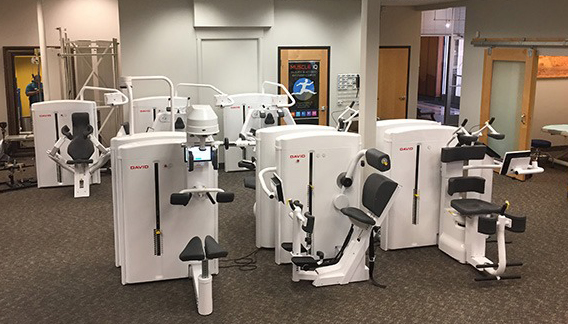
DAVID Knee devices address these limitations by enabling isolated, joint-specific training with quantifiable parameters, ensuring that each phase of rehabilitation is executed with precision rather than estimation.
Biomechanical Precision of DAVID Knee Devices
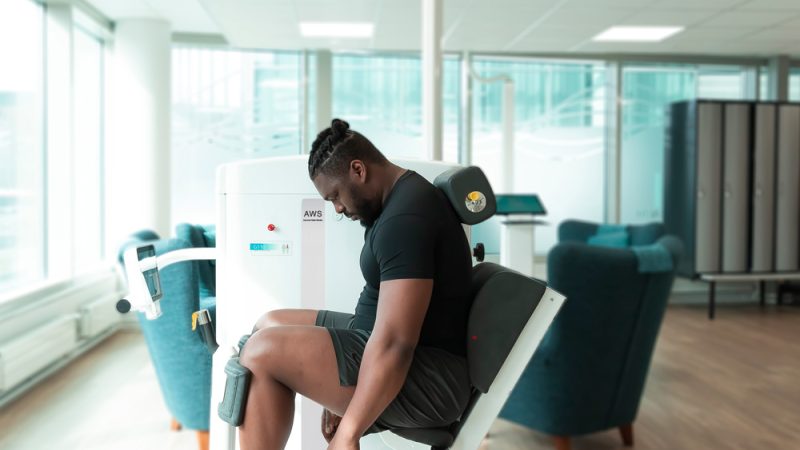
DAVID Knee devices are engineered around medical-grade biomechanics, specifically for the knee joint:
- Accurate axis alignment with the knee joint
- Stable fixation of the thigh and pelvis to prevent compensation
- Smooth, adaptive resistance curves that match muscle capacity
- Controlled and safe range of motion, adjustable per patient
This allows targeted training of:
- Knee extensors (quadriceps)
- Knee flexors (hamstrings)
- Stabilizing structures critical for ACL function
The result is high neuromuscular activation with minimal joint stress, which is essential in both early and later phases of rehabilitation.
Applying Evidence-Based ACL Rehabilitation with DAVID
Based on widely used ACL rehabilitation principles (such as those described in patient-oriented physiotherapy pathways), DAVID Knee devices support each key phase of recovery:
1. Early Phase: Safe Activation & Control
Goal: Restore movement and re-activate muscles without overloading healing tissue.
With DAVID:
- Precisely limited range-of-motion settings
- Low-load, controlled-speed exercises
- Visual feedback to guide movement quality
This enables early activation of the quadriceps and hamstrings while respecting tissue-healing constraints.
2. Strength & Stability Phase
Goal: Rebuild muscle strength and knee stability.
With DAVID:
- Progressive resistance based on objective strength testing
- Isolation of knee extensors and flexors without compensatory hip or trunk movement
- Reproducible training parameters, session after session
This phase is critical for restoring functional knee control, especially after ACL injury.
3. Advanced Strength & Return-to-Function Phase
Goal: Prepare the knee for higher functional demands.
With DAVID:
- Higher-load training with controlled speed and range
- Ongoing comparison against baseline and normative values
- Data-supported progression decisions rather than subjective judgment
This ensures patients do not progress too early or remain underloaded for too long.
Objective Testing as the Foundation of Treatment
A defining strength of the DAVID Knee Solution is that rehabilitation starts and progresses based on measurements, not assumptions.
Using the integrated EVE software platform, clinicians can perform:
- Isometric strength tests
- Range-of-motion assessments
- Side-to-side comparisons (injured vs. non-injured knee)
These data points are used to:
- Build individualised training programs
- Track recovery objectively
- Support clinical decision-making and patient communication
This aligns perfectly with outcome-based care and modern physiotherapy standards.
Safe, Scalable, and Efficient Knee Rehabilitation
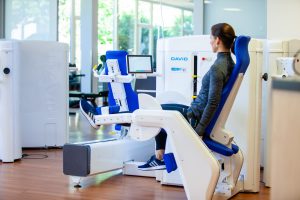
Once properly introduced, many patients can train safely and independently on DAVID Knee devices. This allows:
- One therapist to supervise multiple patients
- Consistent quality of care
- High clinical efficiency without sacrificing safety
For clinics, this means better use of therapist time, improved patient throughput, and precise documentation of outcomes.
From Knee Injury Rehabilitation to Long-Term Prevention
Knee injuries, especially ACL injuries, carry a high risk of re-injury if rehabilitation is incomplete. DAVID Knee devices support not only rehabilitation, but also:
- Secondary prevention programs
- Long-term strength maintenance
- Continued supervised or semi-independent training
By focusing on objective strength, mobility, and control, the DAVID approach helps patients build resilient knees for the future.
The DAVID Knee Difference
The DAVID Knee Solution translates evidence-based knee and ACL rehabilitation principles into a data-driven, device-based treatment model.
Biomechanical precision. Controlled loading. Objective progression. That is how DAVID Knee devices help clinicians treat knee patients with confidence, and help patients return to function safely and measurably.