English


Abstract
Background Axial spondyloarthritis (axSpA) impairs trunk strength, mobility and cardiorespiratory fitness. Despite exercise being a key treatment, few studies have examined a combined trunk mobility, strength and cardiorespiratory training programme. This prospective interventional study assessed the benefits of a personalised training programme based on baseline physical tests.
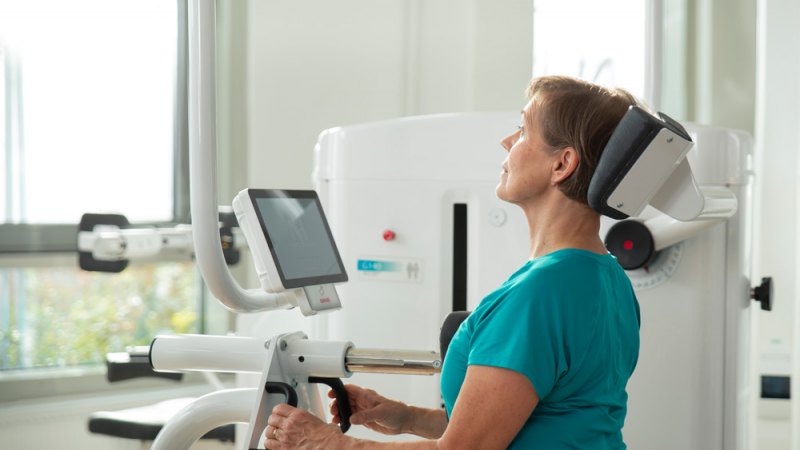
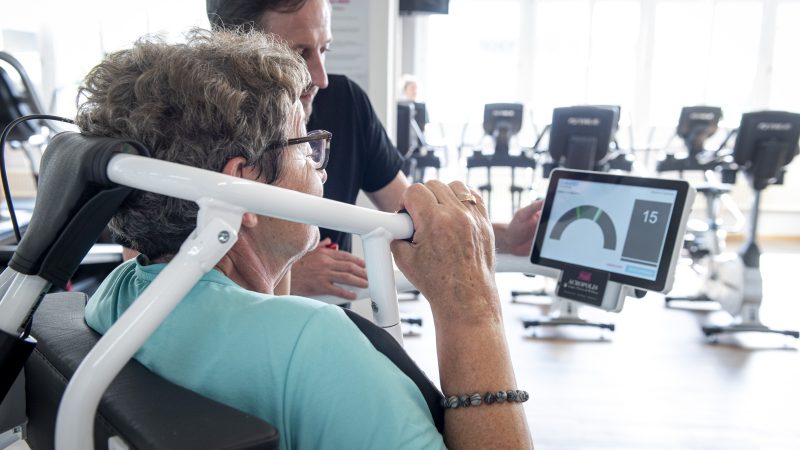
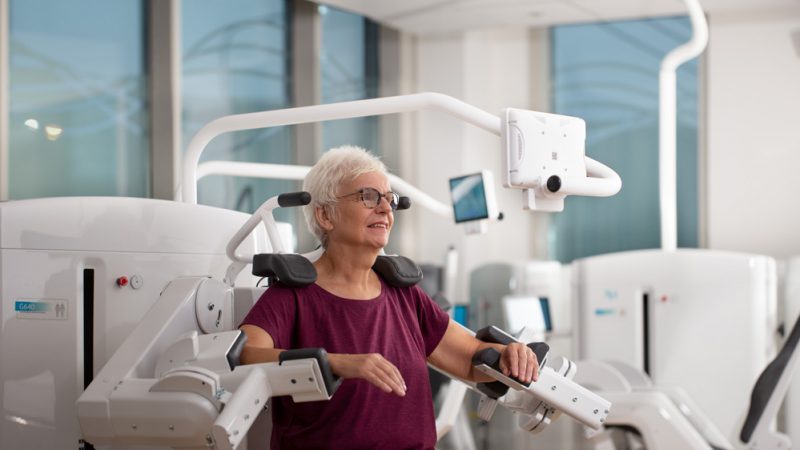
Methods People with axSpA underwent cardiopulmonary exercise testing (CPET) and trunk strength/mobility assessments using the David Back Concept (DBC) devices. Strength and mobility deficits were calculated, and Bath Ankylosing Spondylitis Disease Activity Index (BASDAI), Bath Ankylosing Spondylitis Functional Index (BASFI), Bath Ankylosing Spondylitis Metrology Index (BASMI) and chest expansion (CE) were recorded pre-intervention and post-intervention. The 8-week programme included two sessions per week of cardiorespiratory training (based on ventilatory threshold, heart rate monitored via a Polar device), followed by resistance/mobility exercises on DBC devices. Training intensity was tailored to each individual’s one-repetition-maximum and range of motion at baseline. Post-intervention, CPET and DBC tests were repeated. Changes were analysed using linear mixed models.
Results 30 individuals with axSpA (14 males/16 females, age 42±11.2 years, BASDAI 3.5±2.1, BASFI 2.8±2.2, BASMI 2.0±1.1, CE 4.5±2.0 cm) participated; two were lost to follow-up. Strength increased by 14.1% (p<0.001) and mobility by 14.9% (p<0.001). Significant improvements occurred in oxygen pulse (p=0.004), ventilatory efficiency (p<0.001), anaerobic threshold (p=0.002) and mechanical efficiency (p=0.021). BASDAI (2.9±2.2, p=0.021) and CE (5.0±2.1, p=0.020) improved significantly; BASMI (1.8±1.0, p=0.053) showed borderline improvement, while BASFI remained unchanged (2.4±2.1, p=0.092).
Conclusion A combined, tailored and baseline-guided training programme significantly enhanced cardiorespiratory fitness, trunk strength and trunk mobility in individuals with axSpA, supporting individualised exercise interventions to improve outcomes and reduce functional limitations.
De Mits S, Willems T, Calders P, Danneels L, Varkas G, Van den Bosch F, Elewaut D, Carron P. Patient-tailored training programme on cardiorespiratory fitness, trunk strength and mobility leads to significantly better outcomes in individuals with axial spondyloarthritis. RMD Open, December 2025. PMID: 41475840. DOI: 10.1136/rmdopen-2025-006039 · PubMed